
XELA Group
In Germany, Koykan builds through a local Partner. XELA Group runs restaurants across Germany for two international brands at once, and has done for years. Finding sites, opening restaurants and running them to somebody else’s standard is not a new project for XELA. It is what XELA already does every day.
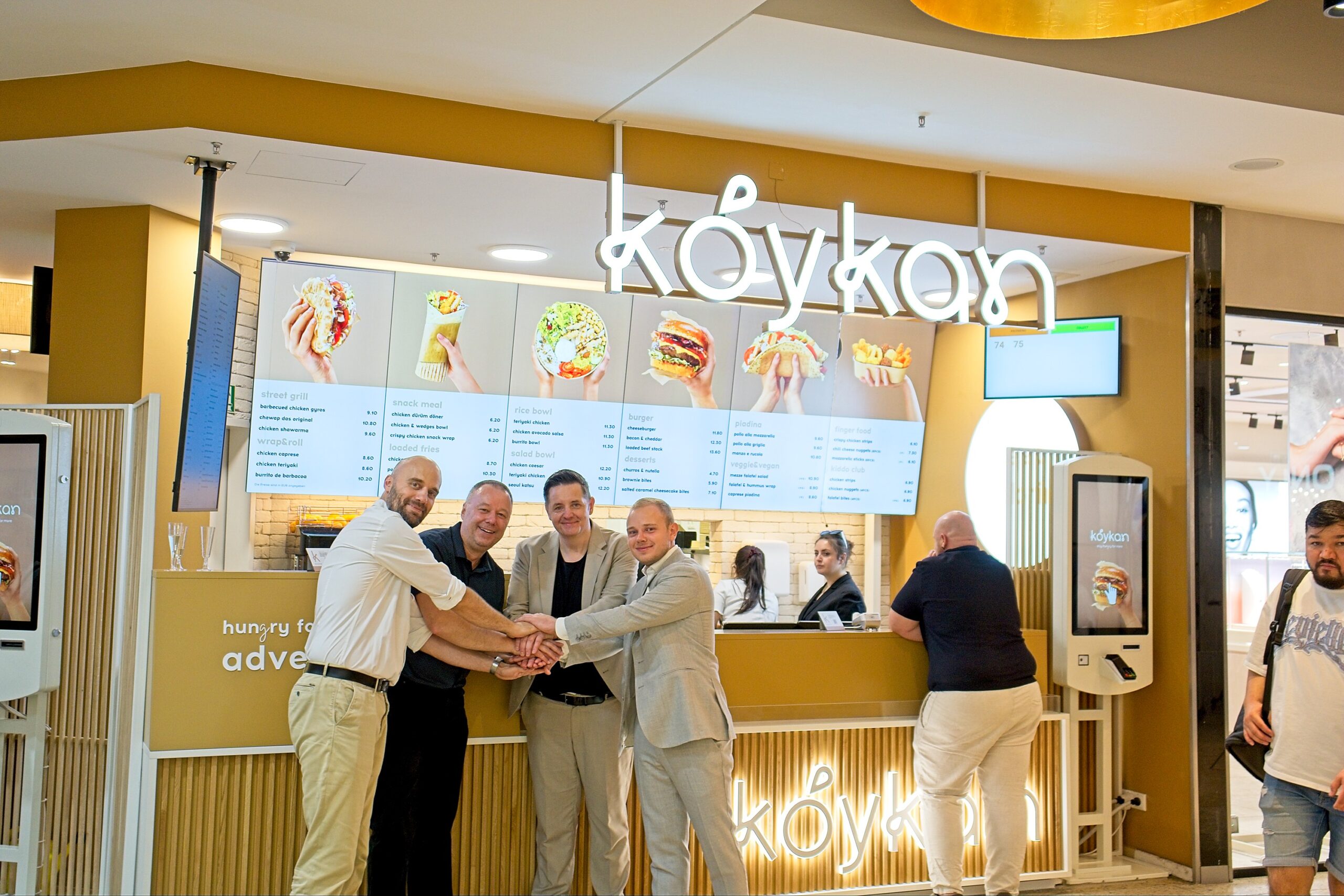
Koykan in Germany. XELA Group runs this market as the Koykan Partner, alongside the two brands it already operates.
Who is XELA?
An operator first. That is the whole reason the partnership exists.
Germany, on the ground
A network of restaurants running across the German market, in shopping centres, city locations and transport hubs. Sites like these are won on relationships and speed, and both take years to build.
Already running at scale
A double-digit network of restaurants under an international brand, in shopping centres, city locations and transport hubs. Running that is the closest available proof that a Partner can run Koykan restaurants too.
More than one brand at once
XELA runs several concepts in parallel, with its own construction, finance and expansion teams. Adding a brand is a process XELA has already built, not a first attempt.
The people behind XELA

Leads XELA and its brand partnerships. On choosing a new concept he has put the emphasis on shared mindset as much as on the product: values, vision and a commitment to quality and growth that match XELA’s own.

Runs finance together with construction and development, which is an unusual and useful combination: the person who signs off the investment also owns the build standard, the cost per restaurant and the speed at which a format can be repeated.
The brands XELA runs
Koykan is not the first brand XELA has taken into the German market, and that is precisely the point. XELA was already running two others before Koykan arrived.
Koykan Partner
Koykan
XELA runs the Koykan restaurant already trading in Germany and is the Koykan Partner for the whole German market, with a plan of twenty restaurants over four years.
The next restaurants are in preparation. Everything XELA builds here is funded by Koykan alongside XELA’s own commitment.
Germany-wide20 restaurants4 years
Franchisee
A leading US QSR chain
XELA is a German franchisee of one of the largest US quick-service restaurant chains, operating a network of locations across Germany, built out over years in busy retail and transport locations. A recently signed multi-year development agreement covers the whole of Germany, adding a further fifteen restaurants.
MunichNurembergLandshutPassauErlangenFürthStuttgartSchwäbisch Gmünd
Master franchise partner
Las Muns
XELA holds the German master franchise for Las Muns, the Spanish handmade empanada concept, after the brand’s entries into Canada and Switzerland.
XELA is building it with compact formats from around twenty square metres, including freestanding and kiosk units, and is already fielding franchise applications before the first location has opened.
Master franchiseCompact formatsNationwide search
This section draws on public sources, including franchisor announcements and published interviews with XELA’s management.
Why this is the kind of Partner Koykan looks for
Koykan chooses a Partner on how well it runs restaurants, and then builds the capital around it. XELA is what that choice looks like in practice.
XELA already invests its own capital
XELA funds its own locations and works with outside investors on others, including arrangements where XELA runs a restaurant financed by someone else. A Partner that has already stood behind an investment, and that raises capital in its own market, reads the Koykan structure the way an owner does.
Construction sits inside the company
Standard, repeatable build methods keep the cost per restaurant down and the schedule predictable. For an investor, build discipline is where most of the risk actually lives.
Several brands running in parallel
A Partner that already switches between systems can absorb another without rebuilding its organisation from scratch.
Local employer, local rules
Hiring, training and German labour rules are a barrier for a foreign brand and routine for a local Partner of this size.
The partnership
The territory is the whole of Germany, built in groups rather than all at once.
XELA builds on the co-funded route, where the Partner and Koykan Capital invest alongside each other. All three routes, and how a Partner earns a share, are set out on Building with partners.
| Item | Detail |
|---|---|
| Territory | The whole German market. |
| Plan | Twenty restaurants over four years, five in each year, funded as two groups of ten. |
| Capital | XELA and Koykan Capital invest alongside each other in each restaurant. XELA also carries the full cost of its own organisation and works actively on bringing capital partners from its own market into the programme. |
| Today | XELA runs the Koykan restaurant already trading in Germany, with the next restaurants in preparation. |
| What XELA earns | A share in the German companies, earned rather than bought, as restaurants open and then settle into steady trading. A fee on the sales of the restaurants XELA runs. |
| What Koykan is paid | A royalty fee, a set share of what each restaurant sells, for the brand, the menu, the suppliers and the systems behind them. |
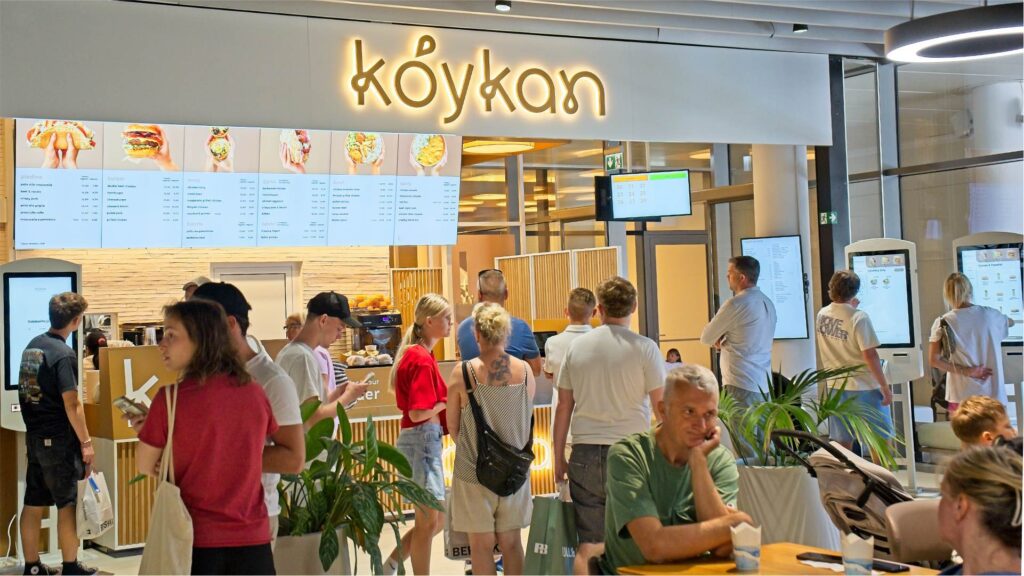
Koykan in Germany. XELA Group runs this market as the Koykan Partner, alongside the two brands it already operates.
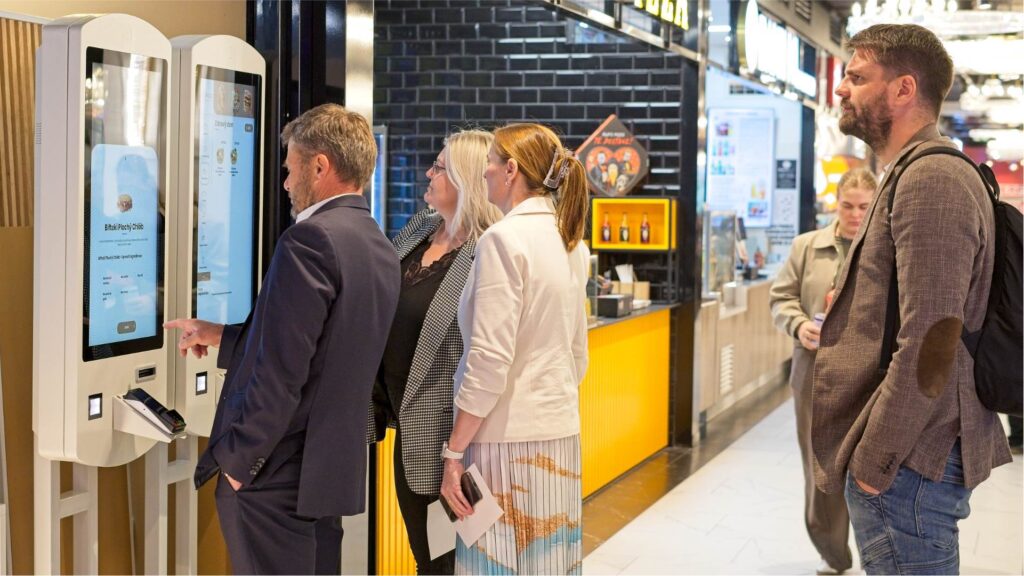
The same counter, the same menu boards and the same ordering kiosks in every market.
What this means for the German rollout
The opening and the running are local
Sites, construction, hiring and daily operations sit with a team that already does this in the same cities, under the same labour rules, with the same landlords.
The system comes from Koykan
Brand, menu, suppliers, standards and the same till system in every market come from Koykan, so every restaurant reports on exactly the same basis, in every market.
XELA is rewarded for delivery
XELA’s share is earned restaurant by restaurant and only counts once a restaurant is trading properly. Nothing is earned by signing.
Germany opens the neighbouring markets
A working German operation is the way into the rest of the German-speaking market, where the same landlords, labour rules and shopping centre groups apply. Each territory is allocated separately.