
Growing with partners
Koykan is not trying to open seven hundred restaurants by itself. It is building a network of Partners, one to a smaller country and several to a large one, each running a territory of its own and each opening steadily. Some fund their territories themselves; others build with Koykan Capital alongside them. Add a few Partners a year and let the ones already running keep opening, and the arithmetic starts doing the work.
This is the plan Koykan is rolling out between 2027 and 2036, and what it takes each year to keep it moving.
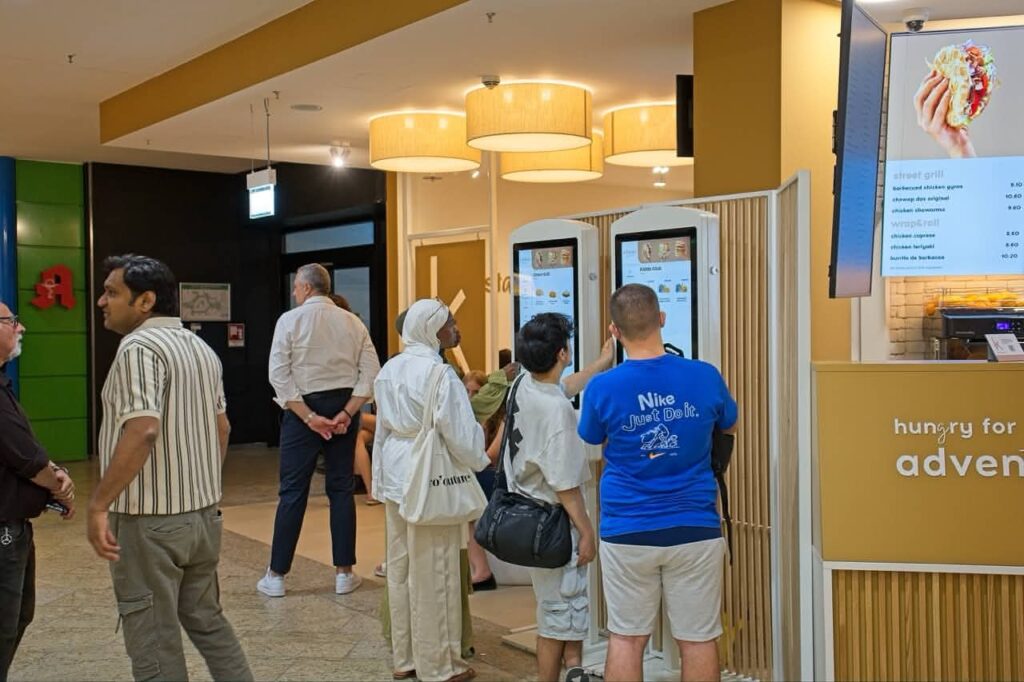
One restaurant, repeated. The same build and the same counter, whichever Partner opens it and whichever market it lands in.
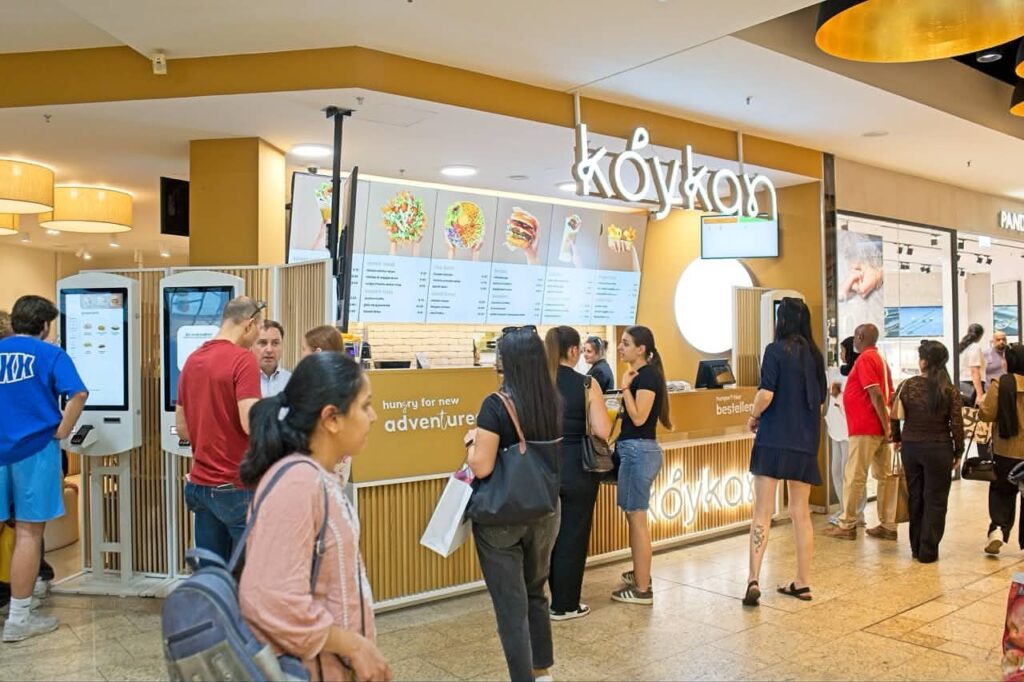
A full counter at lunchtime. Demand like this is what makes a territory worth opening, and what a Partner is judged on.

The product travels. Recipes, suppliers and standards come from Koykan and stay identical across every market.
How the network compounds
Three simple rules drive everything on this page. Koykan signs two to three new Partners a year. Each Partner works up to about five openings a year. Koykan itself opens around five a year, mostly to enter a new market before a Partner takes it on.
Nothing here depends on any single Partner doing something extraordinary. It depends on a steady number of ordinary good years, repeated.
new Partners signed each year
openings per Partner per year once up to speed
Koykan openings a year, mostly opening a new market
capital per location, of which around 350k is the build itself
What that looks like over ten years
Nothing jumps. Each year adds a few Partners, and the Partners already running keep opening. That is why the line bends upward rather than climbing in a straight diagonal.
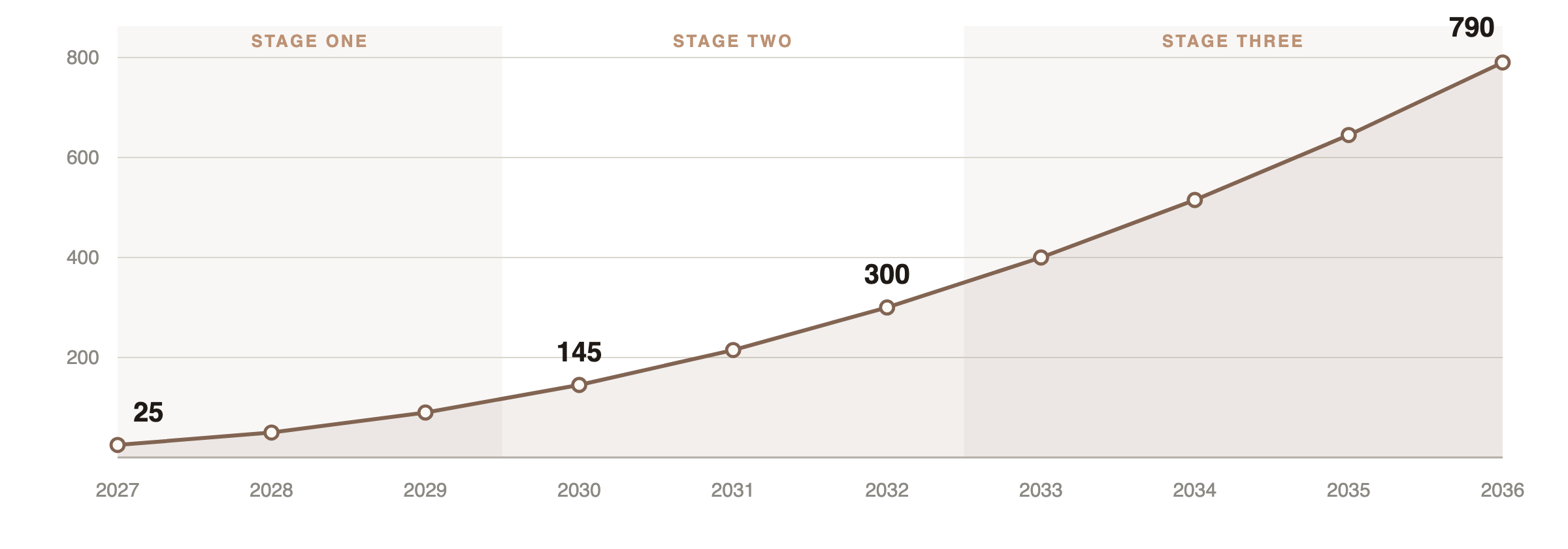
Restaurants open at the end of each year. The line bends because Partners accumulate, not because anyone opens faster: no Partner is assumed to do more than about five a year at any point.
Three stages
The decade splits naturally into three. Each one has a different job, and each one is funded differently.
Prove it repeats
A small number of Partners, closely supported. The job here is not scale but proof: the same build cost, the same opening pace and the same trading pattern, in more than one country and with more than one Partner. Funded by capital raised against the restaurants being built, around twenty eight million across the three years.
active Partners
restaurants open by the end
The curve takes hold
Enough Partners are running at the same time that the yearly total climbs on its own. The earliest restaurants have settled down and start moving to the long-term side, releasing the capital that built them back into the next wave.
active Partners
restaurants open by the end
It compounds
Almost thirty Partners opening in parallel. Outside capital stops being the only engine: settled restaurants keep recycling capital, and Partners who have done well fund more of their own territories directly. More restaurants open in these four years than in the previous six combined.
active Partners
restaurants open by the end
Around seven hundred and ninety restaurants open by the end of the decade. Almost all of them are opened by Partners; Koykan itself opens roughly one in sixteen, usually to enter a market before a Partner takes it on.
Why growth through Partners, and not through a bigger company
Every Partner is a separate engine
A company opening restaurants itself grows in a line. A network of Partners grows in layers, because last year’s Partners keep opening while this year’s start. That is where the curve comes from.
Local execution does not scale from head office
Sites, landlords, permits and staff are local problems solved by local people. Twenty-eight Partners, spread across a small country each or several to a large one, cover their territories properly. One company trying to cover all of them covers none of them properly.
Capital goes into restaurants, not overhead
Of roughly four hundred thousand in capital per location, around three hundred and fifty thousand goes into the restaurant build itself. The Partner carries its own regional office, its own team and its own build supervision.
Risk is spread across territories
A slow year in one market does not stop the others. No single territory, and no single Partner, decides whether the plan works.
What has to be true
This is a plan, and it depends on a small number of things going right. They are worth stating plainly.
Enough good Partners
Two to three signings a year, every year, for a decade. The pool of operators is large enough, but finding and qualifying them is the real constraint, not the capital.
Openings that hold their pace
Around five a year per Partner, sustained. A Partner who slows down does not break the plan, but several who do would.
Restaurants that trade as expected
The build cost, the trading pattern and the time it takes to settle down all have to repeat across markets. That is what the early years are for.
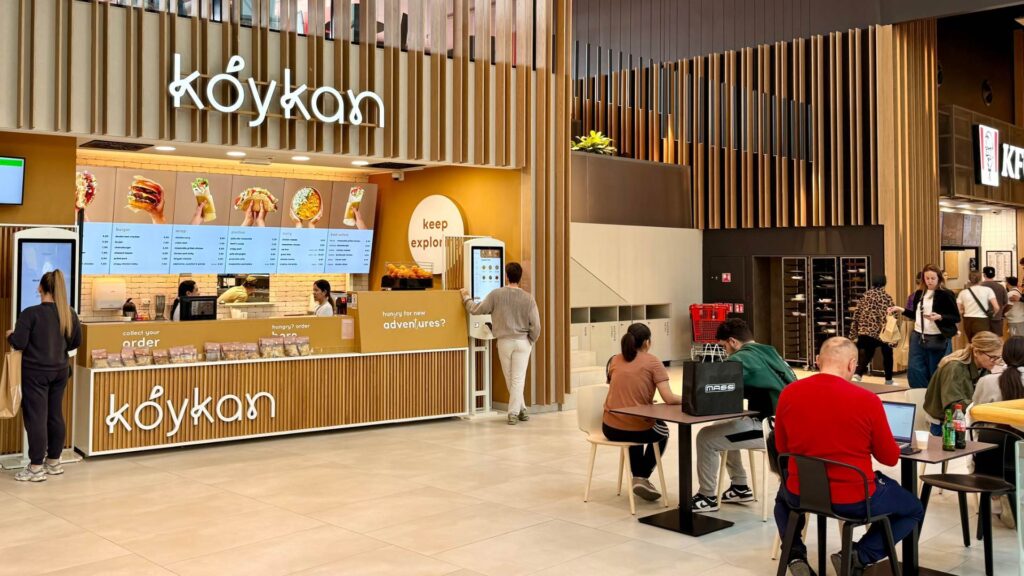
How a Partner is built in
Every number on this page rests on the same arrangement: the Partner opens and runs, Koykan brings the brand and the system, and capital is invested alongside both. How that works, and what a Partner puts in, is set out on the partner model page.