Building with partners
Restaurants are a local business. Whoever opens one needs to know the city, the landlords and where to find good staff. That kind of knowledge does not travel, and no head office can hold it for London, Paris and Prague at the same time. So Koykan does not try. Every market is built by Partners who already run restaurants there. A smaller country may be one Partner and one territory; a large one is split between several, each with a territory of its own. Koykan hands every one of them the same finished business: the brand, the menu, the kitchen, the suppliers and the software. Capital is a separate question, settled Partner by Partner: some fund their territory themselves, others build it with Koykan Capital alongside them.
Partners do the opening and the running. Koykan does everything behind them. This page explains how that works, and what it means if you invest.
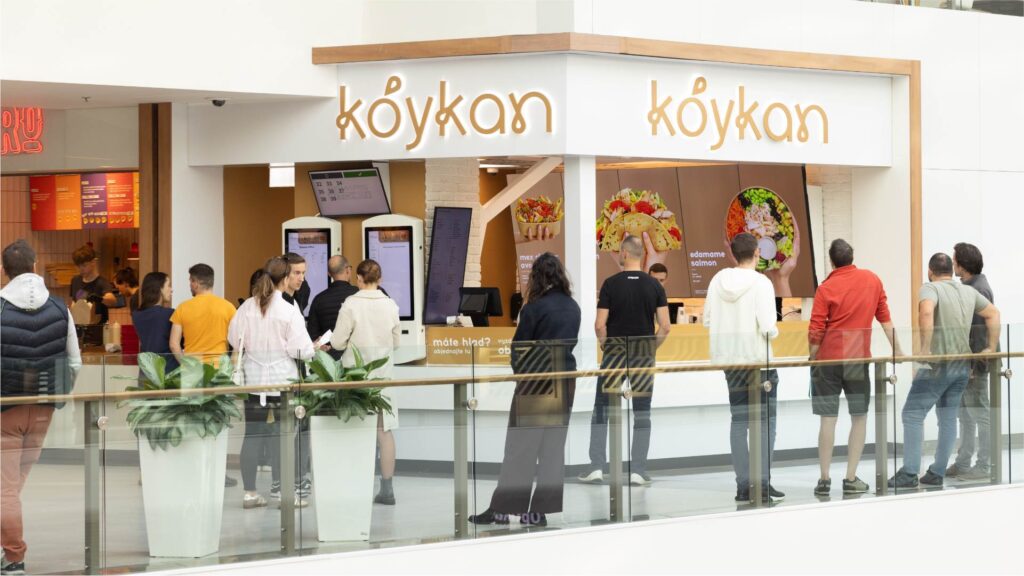
A Koykan restaurant trading in a shopping centre. This is what a Partner opens, and what the capital behind it pays for.
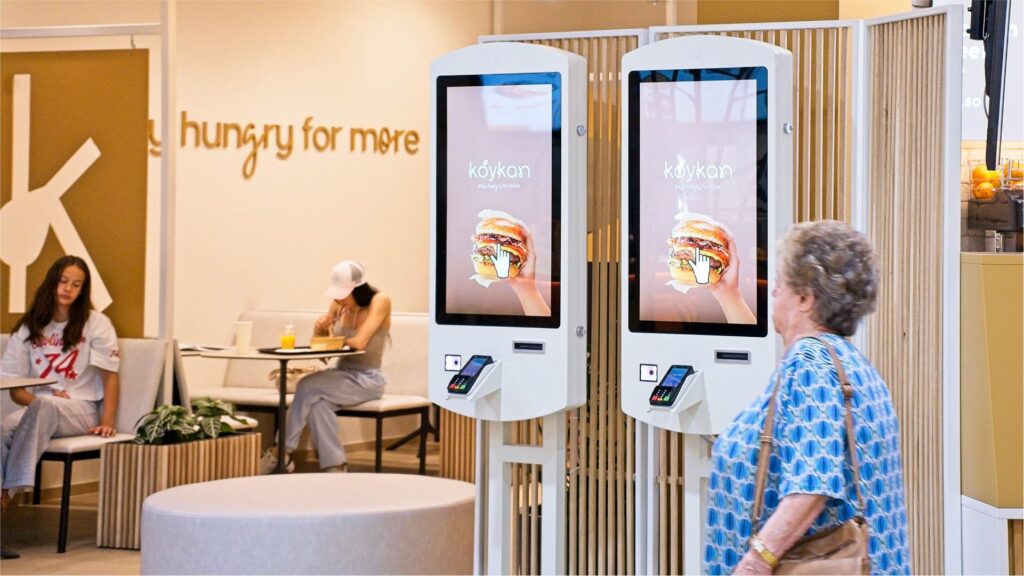
Guests ordering at the kiosks. The same layout, the same screens and the same kitchen in every market a Partner takes on.
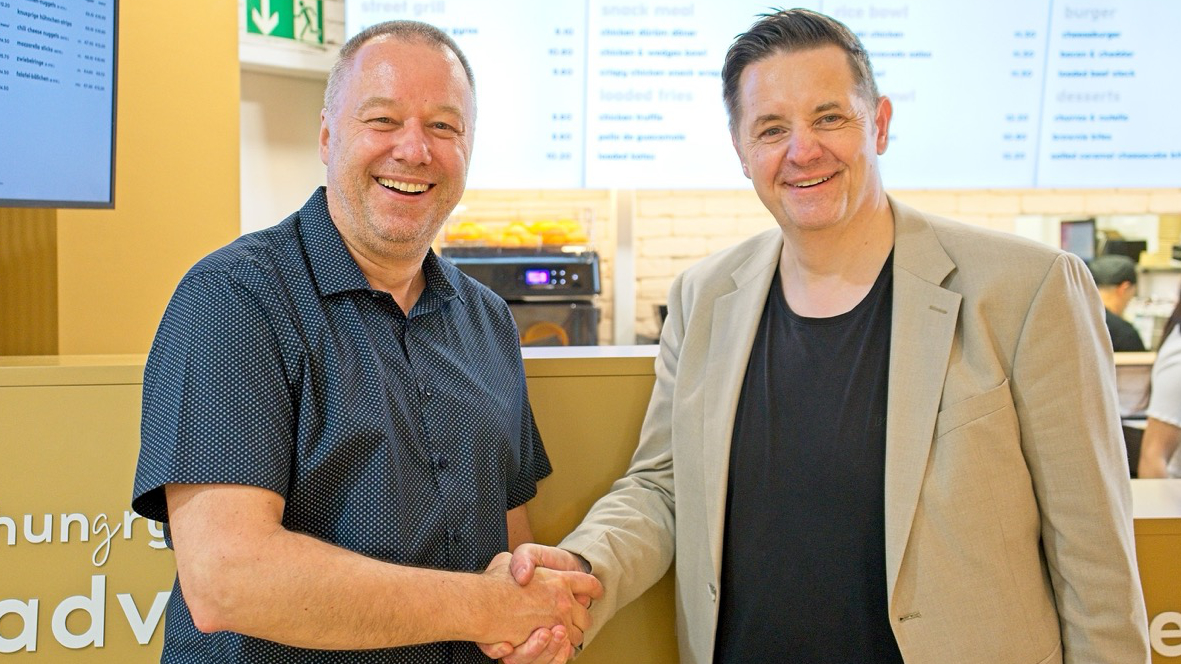
Koykan and XELA Group at the opening of the German partnership. Every market starts with an operator who already knows the ground.
The hard part is finding the operator
In Europe there are somewhere between six and twelve thousand operating companies that already run ten or more restaurants of a big brand. Very few of them, a few hundred at most, could fund a whole territory from their own balance sheet. If Koykan only worked with that small group, it would be fighting every other brand in Europe over the same handful of names.
So Koykan does it the other way round. Choose the Partner because the Partner is good at running restaurants, and then settle the capital question separately. Some Partners need nothing. Others build a territory they could not have funded alone, with Koykan Capital alongside them. That is why Koykan Capital sits next to the partner model rather than inside it.
operating companies in the EU already running ten or more restaurants of another brand
of those companies could take on a territory with capital arranged alongside them
of those companies could fund a whole territory on their own
Rough industry estimates, not a formal market study.
Who does what
Koykan
Brings the business
- The brand and the recipes
- How a restaurant is run, written down and taught
- Suppliers and deliveries
- The same till and reporting system in every country, so the numbers are real and anyone can check them
- Kitchens that are built the same way every time
- Access to Koykan Capital, for Partners who want to build alongside it
The Partner
Brings the market
- Finds the locations and signs the leases
- Builds the restaurants
- Hires, trains and manages the staff
- Pays for its own local office and team
- Puts its own capital into the territory
- Often brings capital partners from its own market
Three ways to partner
The job is the same in all three. What changes is how much capital the Partner puts in, and how much is raised alongside it.
Route one · preferred
The Partner funds the territory
The Partner funds the whole territory from its own balance sheet and owns its restaurants from day one. It pays Koykan an area fee at signing, and after that a royalty fee, a set share of what each restaurant sells. This is the route Koykan prefers: the Partner keeps the whole return on its own capital.
Route two
Koykan and the Partner fund the territory together
The Partner invests alongside Koykan Capital, restaurant by restaurant, and pays for its own local team. Most Partners on this route also bring capital partners of their own. The Partner does not buy a share of the business but earns one, as each restaurant opens and starts trading properly.
Route three
The Partner takes a whole country
The Partner takes a country and becomes Koykan inside it, recruiting, training and supporting its own network of smaller franchisees underneath. It pays a fee for the country and a royalty fee on the sales of the whole network it builds. Used where that is the local custom.
A Partner who starts on the middle route and does well builds up capital of its own, and can fund more of its next territory directly.
Nothing is handed over for free
It would be easy to read this and think the Partner is given a business paid for by somebody else. The Partner is not.
The Partner's own capital
Capital in the restaurants themselves, all of the cost of its own local team and office, and on some routes the whole territory funded without any help at all.
Work long before any revenue comes in
Finding sites, permits, building, hiring and training all happen months before a restaurant takes its first euro. The Partner carries that.
The Partner's own standing
A Partner that already runs a well-known brand brings its reputation, its landlord relationships and its recruiting pipeline with it. In a new market that standing opens doors capital alone does not, and it is the Partner’s to bring.
Nothing for signing
No ownership is handed over at signature. Every bit of it is attached to one specific restaurant, and only counts once that restaurant is genuinely working.
How the Partner earns a share
There are three things the Partner can earn, and all of them depend on restaurants that are actually open and doing well.
| What the Partner gets | How it works |
|---|---|
| A fee on sales | A percentage of what the Partner’s restaurants take. It runs only while the Partner actually runs them, and it stops if the Partner stops. |
| A share in the company that builds the restaurants | Not bought, earned. For each restaurant the Partner gets half of it when that restaurant opens on time and to standard, and the other half about a year later, once an independent check confirms it is really trading well and not just open. |
| A share in the company that keeps the restaurants | Once a restaurant has settled down it moves into a second company that holds it for the long term. The Partner gets a share there too, again one restaurant at a time, and again only if that restaurant keeps performing. |
| If the Partner stops delivering | Anything not yet earned is lost and goes back into the pot for whoever takes over. Koykan keeps the right to step in and keep the restaurants open. |
What this means if you invest
Four things follow from building it this way.
The Partner is paid when it works, not when it is signed
The fee follows sales. The ownership follows restaurants that are open and trading well. Neither follows a signature.
Half the reward waits for proof
For every restaurant the Partner gets only half of its share on opening day. The rest comes about a year later, and only if an independent check says the restaurant is genuinely performing.
Koykan can choose the best operator, not the richest
Where capital can be arranged alongside a Partner, Koykan picks whoever runs restaurants best. Without that option the choice would be limited to the few that could fund a whole territory alone.
If the Partner leaves, the restaurants stay
The brand, the menu, the suppliers, the systems and the reporting all belong to Koykan. If a Partner falls away, Koykan steps in and the restaurants keep trading.
The ways to invest alongside this are set out in the current opportunities on this site.
The kind of Partner Koykan looks for
Has done it before
Already runs several restaurants of another brand, with the team and the systems to run more.
Knows the ground
Real knowledge of the towns, the shopping centres and the landlords in its territory.
Has something at stake
Willing and able to put its own capital into the territory and to carry its own organisation, whatever share of the build it takes on.
Runs a tight ship
Sticks to the standards, reports properly and buys through the agreed suppliers.
How this adds up
Growth comes from the Partner network rather than from the Koykan balance sheet. A handful of good Partners, each opening steadily, adds up faster than one company trying to open everything itself.
new Partners a year
restaurants per Partner a year once up to speed
restaurants stay company-owned
the whole EU is open; the limit is how many good Partners Koykan finds
How a partnership begins
A conversation
What the Partner runs today and what the Partner wants to build.
Checking the fit
The Partner’s background, which route suits and which territory.
Agreeing the territory
Where it is, how many restaurants and over how long.
Signing and starting
Contract, training and systems switched on.
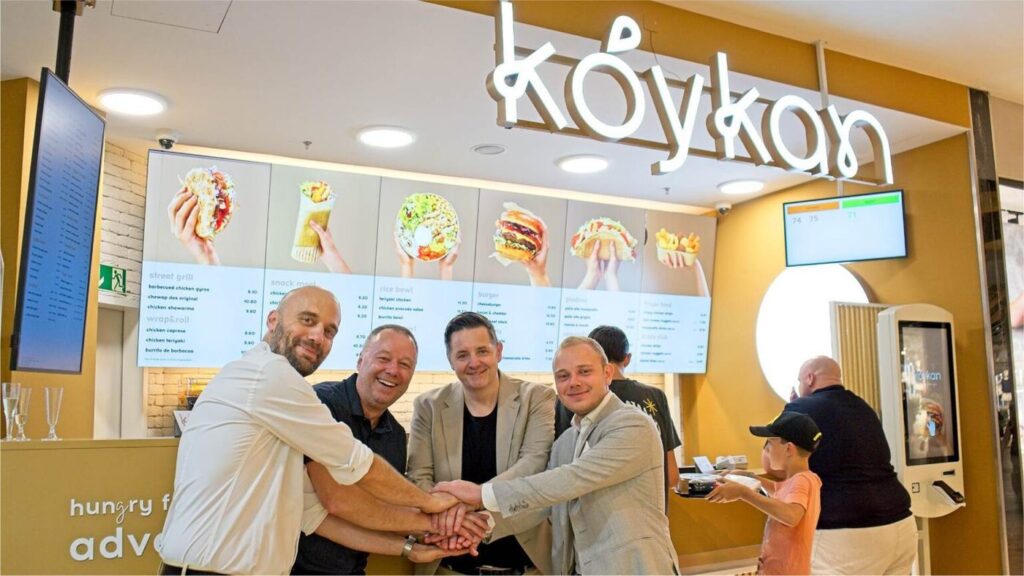
XELA Group, Germany
A restaurant operator running networks for international brands across Germany. XELA Group is the Koykan Partner for the German market.
Talks underway
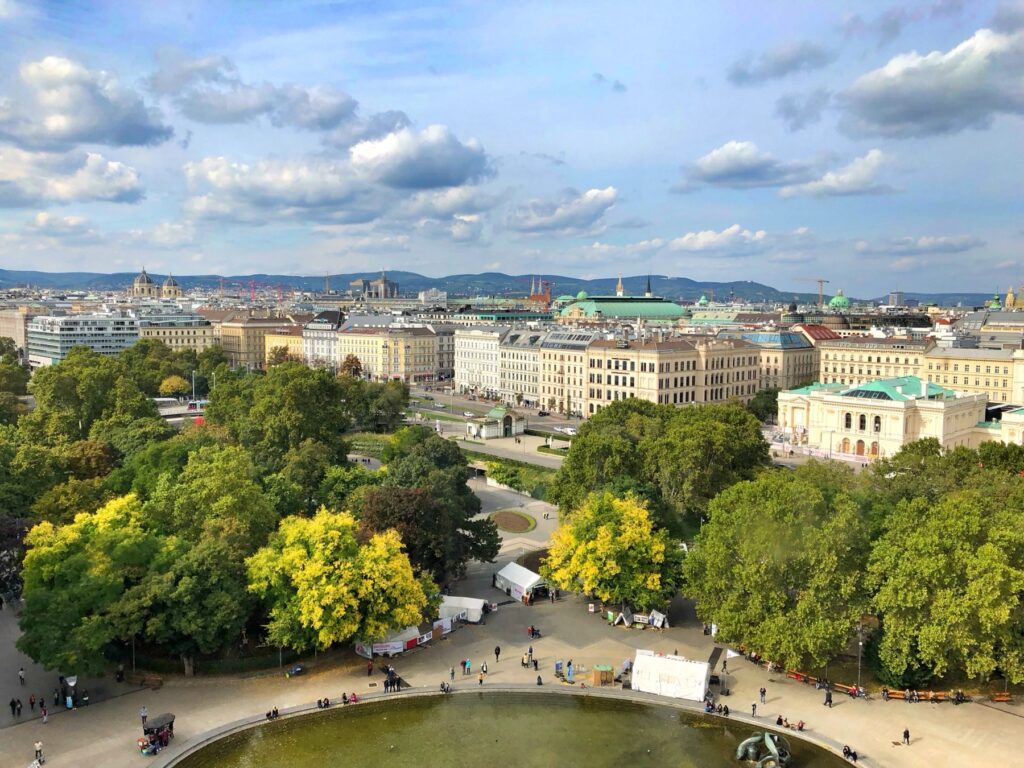
Austria is open
Conversations are running with operators who already know the Austrian market. The territory has not been taken, the shopping centre groups are the same ones Koykan already works with, and the timing is good for whoever moves first.

Talks underway
The United Kingdom is open
A big market, a long list of strong operators and a territory still to be claimed. Conversations have started, and there is room for a Partner who wants to build the whole thing rather than a corner of it.