Current opportunity · Growth Capital · Europe
Growth Capital for 20 new Koykan locations across Europe.
An investment in the shares of the Koykan Growth company, which continuously raises capital and invests it in building restaurants with operating partners across Europe. Value is built in cycles: capital is invested in new locations until they reach stable trading. Such established locations are sold under a pre-published formula, subject to an independent price review (the restaurant remains within the Koykan network, with quality and franchise standards maintained), and the earnings are returned to shareholders through share buy-back offers and a dividend: the company offers to buy your shares for cash – you choose whether to sell – and pays out the remainder to everyone as a dividend.
You enter today and grow as a shareholder.
Target: 1.5x - 2x
The target: to return every euro invested multiplied 1.5 to 2 times over a single cycle of approximately thirty months
from EUR 5,000
Minimum investment for retail investors through this channel
Subscription open until the EUR 8m target at group level is reached · Registered with SKDD
In 30 seconds
The investment opportunity in plain words.
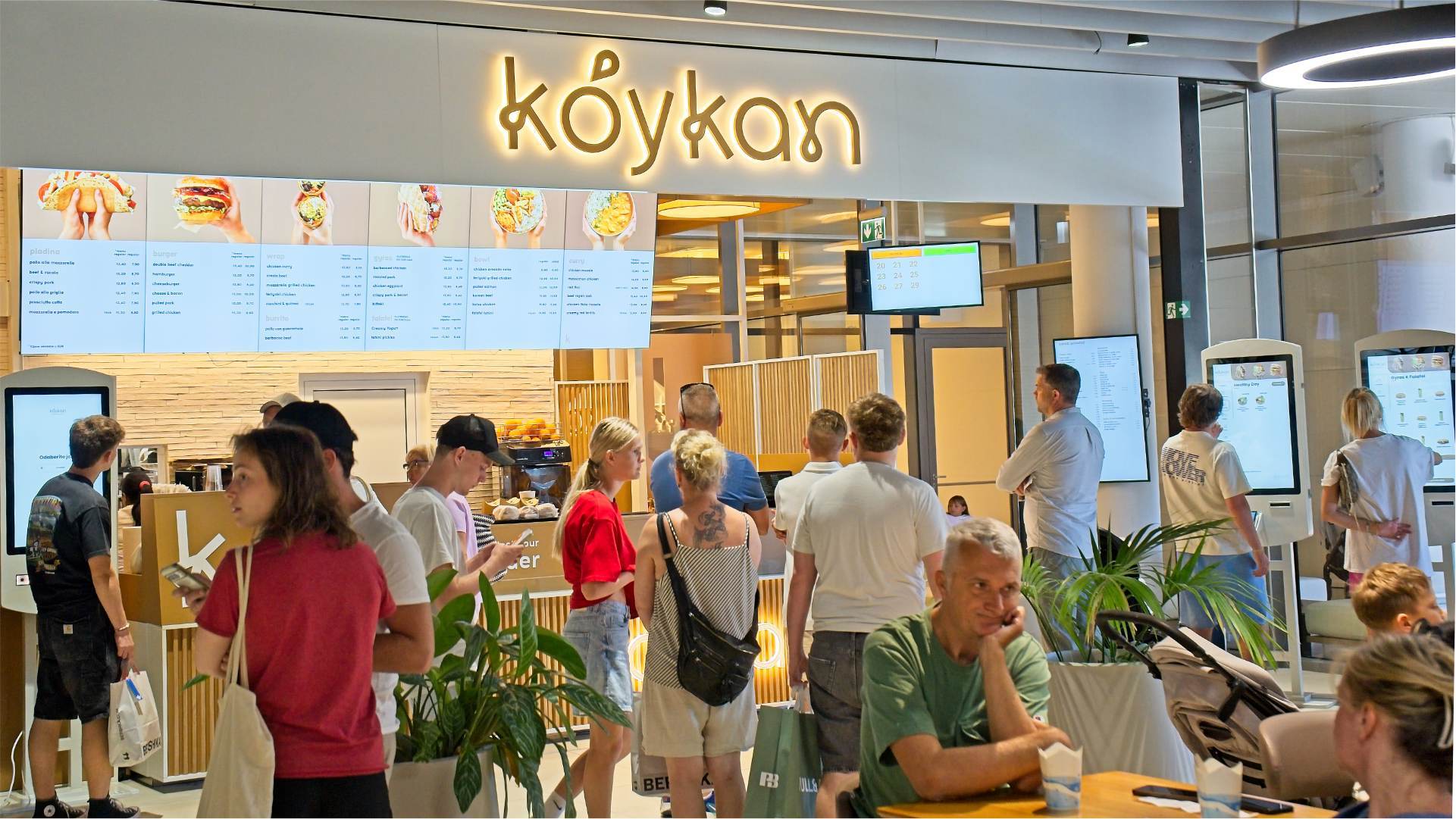
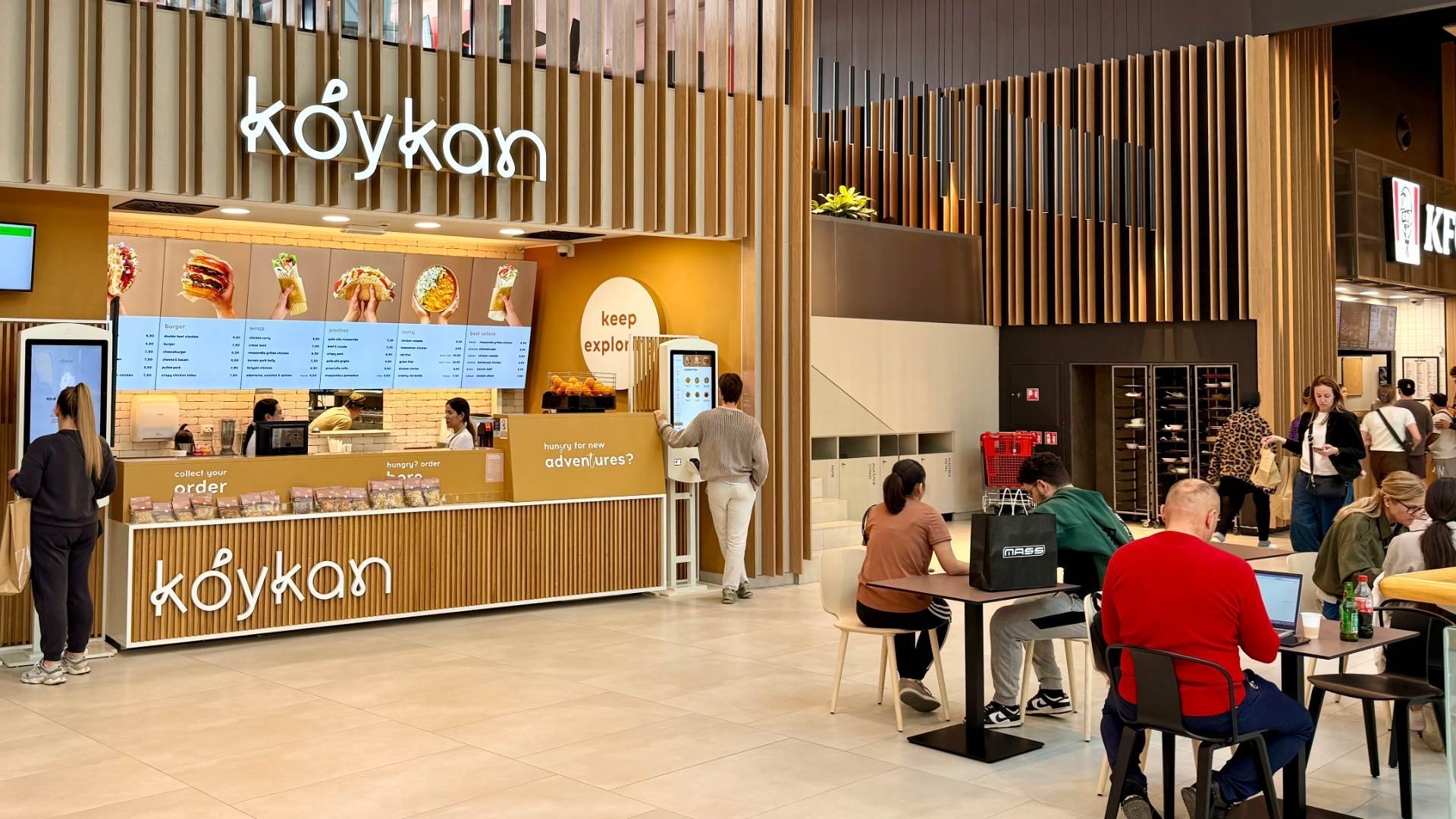
Koykan restaurants have proven they earn: the average location generates EUR 500,000 to 1,250,000 in revenue per year. To open 20 new restaurants across Europe, we established the Koykan Growth company – a company that investors invest in alongside us, becoming its shareholders.
With that capital the company builds new restaurants and then, once established (after roughly 30 months), sells them under a pre-published formula to franchise partners, funds, or the Koykan Yield company (a sister company that holds established restaurants). The earnings are paid out to shareholders through a share buy-back offer for cash (you choose whether to sell) and through a dividend for the remainder. Then it starts again, in a new cycle.
The minimum investment is EUR 5,000, and the target is for every euro invested to be returned multiplied 1.5 to 2 times over approximately thirty months. Early entry is rewarded: whoever pays in now secures 9% per annum for the bond phase – with each completed quarter of the cycle, the interest rate for new subscriptions falls by one percentage point, right up to the close of subscription. How is this carried out in practice? Through a bond that becomes a share – explained further down the page, in the How it works section.
The investment opportunity at a glance
A permanent growth platform, not a one-off opportunity.
The Koykan Growth company works in cycles. The target for the first cycle is EUR 8m at group level, raised simultaneously through three channels: the Croatian public channel (this page), the German public channel and the AIF (an alternative investment fund for professional investors).
First growth cycle: 20 new locations across Europe
The first growth cycle builds 20 restaurants over 24 months. The mandate covers Croatia, Germany, the Czech Republic and Slovakia, where new locations have already been signed, as well as the whole of the EU, where we are entering into partnerships with new local operating partners.
Target for the Growth investment round: EUR 8m
Building a single location costs around EUR 400,000, so 20 locations require an investment of EUR 8 million. It is raised at group level.
Minimum investment: EUR 5,000
The nominal value of one bond is EUR 1,000, and the minimum subscription is EUR 5,000 – five bonds – through this public channel. Professional investors enter through the AIF, from EUR 100,000.
Target return: 1.5x – 2x, corresponding to an annual IRR of 30 to 40%
The cycle’s target is for every euro invested to be returned multiplied 1.5 to 2 times. The return comes from the sale of established locations. A restaurant built for around EUR 400,000 is sold at a multiple of the earnings it generates, not at its build cost.
Cycle duration: approximately thirty months
One cycle lasts approximately thirty months: around two years of building and bedding in the locations, followed by the gradual sale of the established restaurants and the return of capital to shareholders.
A company with no fixed term
The Koykan Growth company is not wound up after the first cycle: capital is invested and realised, and then a new cycle begins. You stay a shareholder for as long as new build cycles continue, and you choose your own exit within that period.
Why Europe, why now
The largest markets, a proven model, partners with aligned interests.
The first growth cycle starts in markets Koykan already knows – in Germany, Europe’s largest food service market, and in Croatia, Slovakia and the Czech Republic, where the network already trades. The model is proven and the interests are aligned: investors, operating partners and Koykan grow together, out of the same result. Here is why Europe, and why now.
Germany and Croatia go first
The first growth cycle builds new locations in Germany with our partner Xela, whose territory covers the entire German market, together with a delivery plan, alongside parallel programmes in Croatia, Slovakia and the Czech Republic, where new locations have already been signed. The network’s existing locations
generate EUR 500,000 to 1,250,000 in revenue per year, with more than EUR 90,000 in annual operating profit (EBITDA) per location – the entire model rests on these figures.
Built by operating partners and Koykan
Every location is built and run by an operating partner – an AOP (Area Operating Partner), the partner responsible for developing and running the restaurants in their territory day to day. The German programme is led by Xela Group, and new programmes are taken on by existing or new partners under the same model. In countries where an operating partner agreement has not yet been signed, the locations are built and run by Koykan through its own operating company, to the same standards. The partner’s fee and their earn-in – the gradual acquisition of an equity stake – are tied to the results achieved, so the operator only earns when shareholders earn too.
The Koykan system delivers the pace
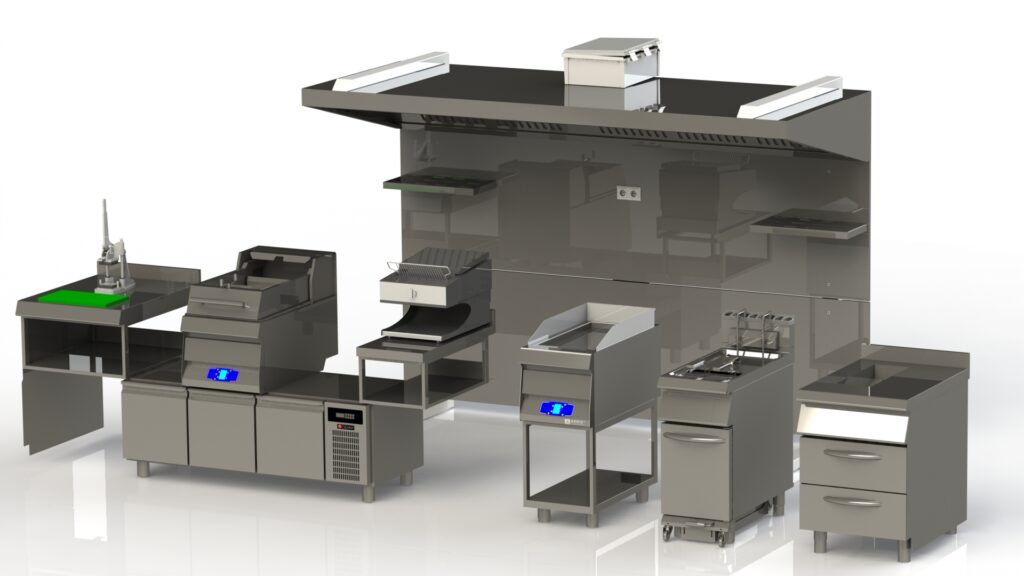
Standardised openings, a modular kitchen and digital-first operations deliver 12 to 15 new locations per year – which is why 20 locations in 24 months is a realistic plan, not an ambition. Established locations are sold under a published platform formula, the same for both sides of every sale and subject to an independent price review, with one of the regular buyers being the Koykan Yield company.
Europe as the mandate
The first growth cycle is 20 locations, but the company’s mandate covers all of Europe: as established locations bed in and are sold under the formula, the next cycle begins. The Growth company remains a growth platform, not a one-off round.
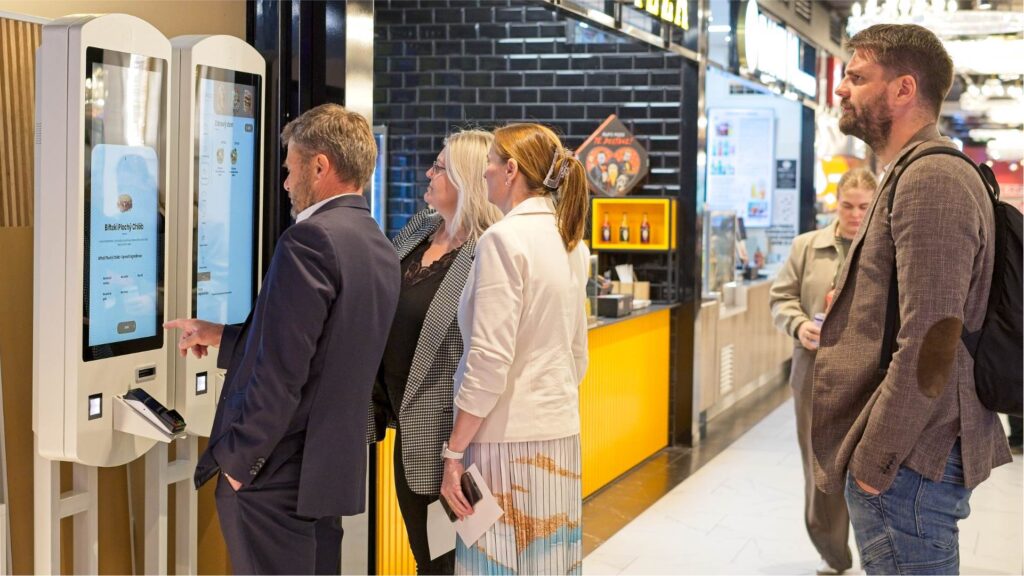
EUR 500k – 1.25m
Annual revenue per location across the Koykan network – the foundation on which the model rests.
> EUR 90,000
Annual operating profit (EBITDA) per location, after operating costs.
Since 2012
Since then Koykan has been building the brand, the technology, the franchise concept and the network of locations – years of operating experience on which this programme rests.
Send questions to our team. We reply personally, in plain language and with no obligation on your part – a registration of interest serves to inform you, not to subscribe.
The figures and the target return
The cycle's targets in figures - and where the return comes from.
The figures are targets derived from an internal model and shown as ranges, with the assumptions described in the issue documentation. The actual result may differ.
Illustrative path of an investment
EUR 10,000 invested → ~1.5x – 2x over the cycle → ~EUR 15 – 20k cycle target
An illustration to show the mechanics, not a promise of returns. The final outcome depends on the performance of the first cycle’s portfolio.
Two entry thresholds: from EUR 5,000 retail (this channel) · from EUR 100,000 for professional investors through the AIF.
Three channels of the same programme: the Croatian public channel, the German public channel and the institutional AIF (the Netherlands). This channel raises capital up to the regulatory limit, and beyond it – with a mandatory prospectus prepared – if investor interest justifies it.
Forward-looking statement
The target ranges stated are based on current assumptions and represent an indication of the potential of the concept presented, not an offer, an invitation to invest or a recommendation. Actual results may differ and may be lower. The material assumptions and risks are described in the issue documentation.
Return and exit
Growth above all.
The return comes from the sale of established locations to the Yield side of the platform, through share buy-back programmes (tender offers) and a dividend for the remainder. All of the above are mechanisms, not guarantees.
Share buy-backs
The primary return mechanism: after selling established locations the company announces a public buy-back offer – offering to buy your shares for cash, under rules published in advance. You choose whether to take part, and after two years of holding, such a sale is as a rule not taxable for individuals.
Reinvesting into the next cycle
Instead of taking the cash, you can keep your shares and carry them into the next cycle. Your capital stays invested and works on a new group of locations, and each subsequent cycle starts from a larger base of established restaurants and a more developed partner network.
A dividend for the remainder
Whatever the buy-back offers do not cover, the company pays out to all shareholders as a dividend – so the cycle’s realised earnings reach shareholders in full.
Long-term scenarios
As the company grows, so does the interest of larger players: in the event of a strategic or private equity transaction, the buyer acquires shares directly from shareholders.
How it works
From payment to share, in three steps.
The bond is the entry phase: your capital goes to work immediately, while share capital increases are carried out in an orderly way, in cycles. The goal is shares – the conversion is carried out as a corporate action at SKDD, the Croatian Central Depository & Clearing Company.
Step 1
Bond subscription - the entry phase
You subscribe for bonds of the Koykan Growth company: nominal value EUR 1,000, minimum subscription EUR 5,000, all registered with SKDD. The interest rate depends on how full the cycle is: 9% per annum below 25% subscribed, then 8%, 7% and 6% for each completed quarter – the rate agreed when you pay in remains yours until conversion. We confirm the applicable rate before every payment. Your payment goes straight into construction: earlier investors enable building to start sooner, and therefore earn a higher rate. Koykan also has a track record of coupon payments made on schedule to its investors.
Step 2
The bond becomes a share, 1 : 1
On the close of subscription – when the cycle is fully subscribed or at the latest 12 months after opening – the principal is converted into shares by set-off – a direct exchange of the claim for shares – according to the amount paid in, 1 : 1: for example, for EUR 10,000 of bonds you receive EUR 10,000 of shares. The conversion is a corporate action at SKDD: the shares are credited directly to your SKDD account.
Step 3
You become a shareholder in the Growth company
The Growth company opens 20 new locations, and after the established locations are sold the return arrives through share buy-back offers and a dividend for the remainder.
An investor joins the Koykan Growth company by buying a bond: the funds are allocated immediately to building new locations, and until the bond converts into shares the investor earns a coupon yield of 6 to 9% per annum, according to the published scale of how full the cycle is: the earlier they enter, the higher the rate.
Why a bond at entry? Investor capital arrives continuously, almost daily, whereas increasing a joint-stock company’s share capital is a separate, formal corporate event that is not carried out for each individual payment. The bond bridges those two rhythms: every payment goes straight into construction, and converts into shares in an orderly way, in cycles.
All bonds convert into shares at once – when the cycle is fully subscribed or at the latest 12 months after subscription opens. The conversion is carried out by set-off, 1 : 1 according to the amount paid in – for example, for EUR 10,000 of bonds the investor receives EUR 10,000 of shares. The process runs as a corporate action at SKDD: the shares are credited directly to the investor’s SKDD account. Each subsequent fundraising cycle uses the same mechanism, with one difference: in later cycles the conversion price is determined by the then-published portfolio value per share, so that the entry of new investors does not dilute existing ones.
Safety net: if the conversion or the reorganisation into a joint-stock company does not go ahead, the bond remains in force with a three-year maturity and its agreed interest rate, with the principal repaid at maturity.
Timeline
From subscription to the share, and onward in cycles.
-
Subscription (open)Runs until the EUR 8m cycle is fully subscribed at group level or for a maximum of 12 months – whichever comes first.
-
Towards the close of subscriptionReorganisation into a joint-stock company (d.d.).
-
On the close of subscriptionA single conversion for all investors at once: bonds become shares 1 : 1 according to the amount paid in, as a corporate action at SKDD. Interest is accrued up to conversion and paid out with it.
-
~2 yearsBuilding and bedding in the first cycle’s locations, with EUR 500,000 – 1,250,000 in target revenue per location.
-
~thirty monthsSale of established locations – on the market, to partners, to funds or to the Koykan Yield company – together with share buy-back offers and dividends. Sales proceed gradually, as each location beds in, and every realised round is returned to shareholders in full.
Risks
What you should know before investing.
Key risks
- The investment carries the risk of losing part or all of the principal invested.
- Returns and multiples are targets based on assumptions, not promises. They involve operational, market, regulatory and construction delivery risks.
- If the reorganisation or the conversion does not go ahead, the bond remains in force with its agreed interest rate and a three-year maturity – with issuer risk still present.
- The investment is long-term in nature; the return is generated through share buy-backs and dividends, in line with the pace at which established locations are sold.
- The complete list of risks, terms and fees is set out in the issue documentation, which we provide after a registration of interest. Read it before making a decision.
Become a shareholder in the Koykan Growth company.
Let us know you’re interested, and we’ll send you the full issue documentation, details about the issuer, and the next steps.
Registering interest is a non-binding submission, not a payment.
Subscription until the EUR 8m target at group level · Retail from EUR 5,000 · Professionals through the AIF from EUR 100,000
FAQ
Short and clear.
What exactly am I investing in?
In the shares of the Koykan Growth company – the company that builds Koykan restaurants across Europe. The first growth cycle covers 20 locations, and as a shareholder you share in the earnings from selling them under the pre-published formula.
Why invest through a bond?
Investor capital arrives continuously, whereas increasing a joint-stock company’s share capital is a separate, formal corporate event that is not carried out for each individual payment. That is why the bond is the entry phase: the funds work immediately, and convert into shares for everyone at once – when the cycle is fully subscribed or at the latest 12 months after subscription opens – 1 : 1 according to the amount paid in.
What if the conversion doesn't go ahead?
The bond remains in force: the maturity is three years at the agreed interest rate, so the principal plus interest is repaid at maturity. That is a safety net, not the purpose of the structure.
Who builds and runs the locations?
Operating partners – AOPs (Area Operating Partners), the partners responsible for developing and running the restaurants in their territory. For the German programme that is Xela Group, and new locations are taken on by existing or new partners under the same model. Their fee and earn-in are tied to results.
What is the minimum investment?
EUR 5,000 through this channel. Professional investors enter through the AIF, from EUR 100,000.
Is the issue regulated?
Yes. The issue is carried out in accordance with regulations, with notification to the competent regulator and registration with SKDD. This page is an informational summary and does not constitute an offer or an invitation to invest.
How do I exit the investment?
The return comes through share buy-back offers and dividends, after the established locations are sold; the investment is long-term in nature.